

Medical travel to China requires more than choosing a hospital and booking a treatment appointment. International patients must also consider clinical complications, recovery requirements, the safety of long-distance travel, and how medical care will continue after returning home.
The most important risks are not limited to the treatment itself. They also arise when a patient leaves the Chinese hospital before recovery is complete or returns home without a clear plan for necessary follow-up care.
Before committing to medical travel to China, patients should confirm three essential arrangements. Who will manage complications during recovery in China, what conditions must be met before flying home, and who will provide any necessary follow-up care after the return journey.
If important clinical or practical responsibilities remain unclear, the relevant arrangements should be resolved before making irreversible travel commitments.
The CDC Yellow Book 2026 guidance on medical tourism identifies infections, noninfectious complications, travel-related risks, and gaps in continuity of care as important considerations for international patients. These are general medical travel risks, not evidence that Chinese hospitals have a particular complication rate.
The actual level of risk depends on the patient’s health, the proposed medical procedure, the Chinese hospital’s capabilities, and the availability of appropriate recovery and follow-up services.
This guide explains how international patients can evaluate these factors when considering treatment in China, which responsibilities should be confirmed with healthcare professionals, and how to prepare for complications, recovery delays, and continued care after returning home.
What Are the Main Risks of Medical Travel to China?
Medical travel to China combines the risks associated with a particular medical procedure with the additional challenges of receiving healthcare across national borders.
Some patients may only need a specialist consultation, diagnostic examination, or relatively simple outpatient procedure. Others may require surgery, hospitalization, rehabilitation, or repeated clinical assessments.
Their medical travel risks are not equivalent.
The practical approach is to distinguish treatment-related complications, travel-related health risks, and potential interruptions in medical care. Each category involves different preventive measures and professional responsibilities.
Infection and Other Treatment-Related Complications
Infection is an important consideration for patients undergoing invasive medical procedures. Other possible complications include bleeding, adverse medication reactions, anesthesia-related problems, wound complications, and issues specific to the treatment performed.
Their likelihood and severity depend on the procedure, the patient’s health, the clinical circumstances, and the healthcare facility’s practices.
The CDC identifies infection-related complications as a major concern in international medical tourism. Its guidance discusses the consequences of inadequate infection prevention practices, including surgical-site infections and infections involving antimicrobial-resistant organisms.
This evidence concerns international medical tourism generally. It should not be used to infer that a particular Chinese hospital has poor infection control or that infection rates in China are equivalent to those reported in other countries.
For international patients considering surgery or another invasive procedure in China, the important task is to understand how the receiving hospital prevents, identifies, and manages complications.
Patients should ask what infection prevention procedures apply to their planned treatment, whether postoperative monitoring is required, and which clinical team will assess unexpected symptoms.
For example, someone considering orthopedic surgery may need information about postoperative wound monitoring, infection assessment, and the availability of additional specialist care. A patient arranging a routine diagnostic examination may have substantially different safety concerns.
A hospital’s accreditation or published reputation can provide useful background, but neither establishes that a particular procedure will be appropriate or complication-free.
The relevant question is whether the Chinese medical team has the appropriate capabilities and supporting services for the patient’s actual clinical needs.
Long-Distance Travel, Blood Clots and Recovery Risks
Long-distance travel can introduce additional health risks when patients are recovering from surgery or managing medical conditions that restrict mobility.
One important concern is venous thromboembolism, or VTE, which includes deep vein thrombosis and pulmonary embolism.
Deep vein thrombosis occurs when a blood clot forms in a deep vein, usually in the leg. Pulmonary embolism can occur when part of a clot travels to the lungs and obstructs blood flow.
According to the CDC Yellow Book guidance on deep vein thrombosis and pulmonary embolism, prolonged immobility during long-distance travel can increase the risk of blood clots.
Recent surgery, restricted mobility, active cancer, previous blood clots, and certain other medical conditions may further increase an individual’s risk.
For patients traveling home after surgery in China, the interaction between postoperative recovery and prolonged sitting during a flight deserves particular attention.
However, the risk is not the same for every patient. General estimates of blood clot risk among airline passengers should not be treated as estimates for people recovering from specific medical procedures.
The appropriate decision depends on the procedure performed, the patient’s mobility, existing medical conditions, and the clinical assessment of travel-related risks.
Patients should discuss these issues with the treating team before committing to a return-flight schedule.
Language Barriers and Gaps in Continued Care
Communication can become a medical safety issue when patients receive treatment in a language they do not fully understand.
In China, some hospitals operate international medical departments or provide multilingual assistance. Other hospitals or departments may communicate primarily in Mandarin.
The availability and scope of language support vary between institutions and clinical services.
Patients should not assume that an international registration desk or English-language appointment service guarantees professional interpretation throughout the entire treatment process.
Effective communication is particularly important when discussing a diagnosis, treatment alternatives, possible complications, informed consent, medication changes, and discharge instructions.
A patient who misunderstands postoperative restrictions or warning signs may have difficulty identifying when further medical evaluation is necessary.
Communication challenges can also continue after returning home.
If the patient’s home-country clinician cannot obtain or understand the treatment records from China, appropriate follow-up may be delayed.
The CDC guidance on medical tourism recommends obtaining records of care received overseas and sharing them with healthcare professionals who provide subsequent treatment.
The main risk is therefore not simply that records may be missing. It is that essential clinical information and follow-up responsibilities may not be adequately transferred between the Chinese treating team and the receiving healthcare provider.
Patients should confirm both the availability of necessary medical documents and the practical arrangements for continued care.
How to Verify a Chinese Hospital’s Safety and Care Arrangements
Hospital verification should focus on the clinical capabilities and safety arrangements relevant to the patient’s proposed treatment.
Choosing a well-known Chinese hospital or an international medical department does not remove the need to verify specialist availability, appropriate clinical services, and complication management.
Patients should distinguish information that can be checked through official registration records from information that requires confirmation directly from the hospital.
Verify Clinical Capabilities and Relevant Hospital Credentials
China’s healthcare system includes public hospitals, private medical institutions, specialist facilities, and international medical departments.
These institutions may offer different clinical services, appointment procedures, language arrangements, and levels of supporting care.
Before traveling, patients should confirm the registered identity of the receiving institution and identify the department and medical professionals expected to provide their care.
The National Health Commission’s official information-query platform provides access to relevant healthcare registration information, including physician registration services. Healthcare institution licensing information can also be checked through the applicable Chinese government service platform.
These resources can help patients verify institutional or professional registration details.
However, registration alone does not establish a doctor’s experience with a particular procedure, the hospital’s clinical outcomes, or the suitability of treatment for an individual patient.
For procedures involving substantial risk, patients may need to ask whether the proposed department routinely manages similar clinical cases, which specialists will participate, and what supporting services are available.
Procedure volume and complication data may be informative if the hospital can provide reliable figures.
When reviewing such information, patients should establish which procedures and patient groups were included, what outcomes were measured, and how long patients were followed.
An infection or complication rate without a clear patient population, denominator, and observation period may be difficult to interpret.
Patients seeking a more detailed framework can consult RegenComp’s guide to doctor credential verification for medical tourism.
The purpose of this evaluation is not to rank hospitals using one indicator. It is to identify whether a Chinese medical institution has the relevant expertise and resources to assess the patient’s needs.
Ask About Infection Control and Complication Management
A hospital’s ability to perform a procedure should be considered alongside its ability to recognize and manage foreseeable complications.
The necessary clinical support depends on the treatment.
A complex surgical procedure may require access to inpatient monitoring, emergency imaging, laboratory services, specialist consultation, and other forms of hospital care.
An outpatient procedure may require a different set of precautions and follow-up arrangements.
Patients should confirm which services are available at the actual facility where treatment will occur and what happens if further medical support is needed.
If a complication develops after discharge, the patient should know whether the original department can provide reassessment, how urgent concerns are handled, and whether another department or institution would be involved.
These arrangements are especially important when the patient expects to recover outside the hospital before taking an international flight.
A useful verification framework is provided below.
Hospital Safety Verification Questions
| Verification Area | Question to Ask the Chinese Hospital |
|---|---|
| Clinical expertise | Does the relevant team routinely manage patients with conditions similar to mine? |
| Practitioner qualifications | How can I verify the registration and relevant clinical qualifications of the treating professionals? |
| Infection prevention | What infection prevention and monitoring procedures apply to my proposed treatment? |
| Complication management | Who provides clinical assessment if an unexpected complication develops after discharge? |
| Emergency support | What specialist, emergency, or transfer arrangements are available if additional care becomes necessary? |
| Language support | How will treatment explanations, consent, and discharge instructions be communicated? |
| Follow-up care | What postoperative reviews are expected, and how can necessary medical records be obtained? |
Patients should request specific answers where possible, rather than relying on general assurances that a hospital is safe or internationally recognized.
When a hospital cannot provide publicly verifiable outcome figures, that limitation should be acknowledged. An unavailable statistic should not automatically be treated as evidence of poor care, but it should not be replaced by an unsupported performance claim.
Confirm Language Support and Clinical Responsibilities
Effective medical communication requires patients to understand the clinical information provided by qualified healthcare professionals.
Before arranging treatment in China, patients should ask who will explain the proposed procedure, who will discuss risks and alternatives, and how informed consent will be handled.
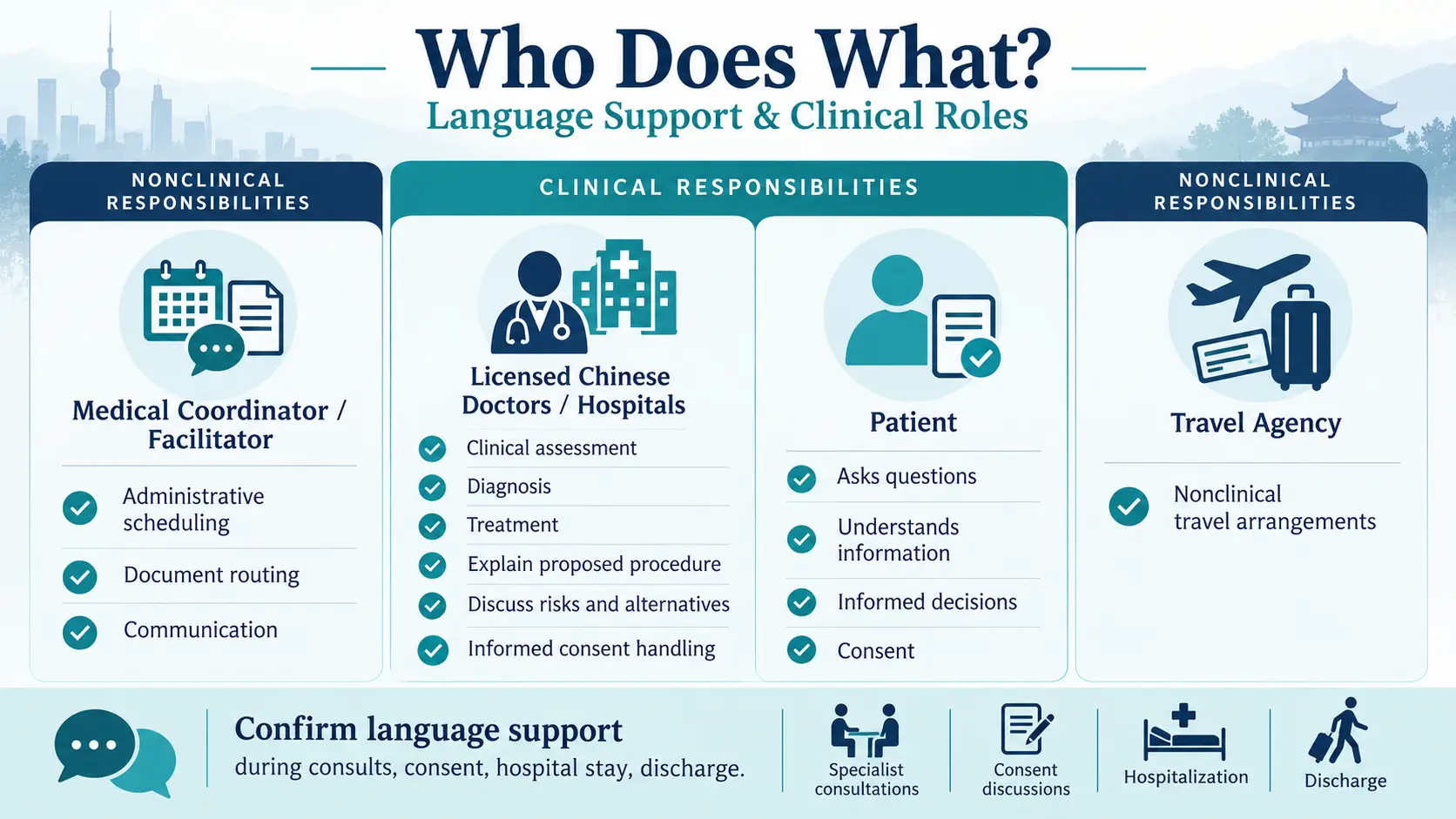
If interpretation is needed, confirm whether suitable assistance is available during specialist consultations, consent discussions, hospitalization, and discharge.
It is also important to distinguish clinical responsibilities from administrative assistance.
Chinese physicians and other appropriately qualified healthcare professionals are responsible for medical assessment, diagnosis, treatment decisions, and clinical instructions within their professional roles.
Hospital administrative staff and medical coordination services may assist with appointments, information transfer, language arrangements, and communication.
They do not replace the treating clinician’s responsibility for medical decisions.
For example, a coordinator may help a patient send medical records to a Chinese hospital or arrange an interpreter for a consultation. The clinician must still evaluate the records, explain relevant findings, and determine whether the proposed treatment is appropriate.
Patients should establish which hospital contact is responsible for clinical concerns and which contact handles administrative matters.
This distinction becomes particularly important when unexpected medical problems arise outside scheduled appointments.
How to Plan Recovery and Medication Arrangements in China
Recovery planning should reflect the patient’s anticipated clinical needs and the Chinese treating team’s instructions, rather than a travel itinerary designed around a fixed departure date.
Before traveling, patients should understand which recovery arrangements can be planned in advance and which decisions will depend on the results of treatment.
Three areas deserve attention. Medical discharge and postoperative observation, medication continuity, and the practical ability to accommodate recovery delays.
Confirm Discharge Conditions and Recovery Requirements
Hospital discharge does not necessarily mean that recovery is complete or that international travel is safe.
A patient may be considered ready to leave the hospital while still requiring medication, wound care, rehabilitation, activity restrictions, or further clinical review.
The treating team should explain the expected recovery process and the conditions that must be satisfied before leaving the immediate hospital area or undertaking a long journey.
For some medical services, patients may return to normal activities relatively quickly. Other procedures may require a longer observation period or repeated appointments.
The distinction is particularly important for international patients who must decide how long to remain in China.
Before treatment, patients should ask what follow-up appointments are expected, what clinical findings could delay discharge, and whether recovery is likely to involve restrictions on mobility or travel.
For example, a patient requiring a postoperative wound review should establish whether that assessment needs to occur at the Chinese hospital or can appropriately be completed by a healthcare professional at home.
Similarly, patients undergoing procedures that may require staged treatment should confirm the anticipated sequence of appointments before choosing travel dates.
The expected timeline may change after treatment. Recovery estimates provided in advance should not be interpreted as guaranteed discharge dates.
Before leaving the hospital, patients should receive understandable instructions describing necessary medication, activity restrictions, relevant warning signs, and follow-up requirements.
Check Medication Restrictions and Prescription Continuity
Medication planning involves two separate responsibilities.
The first is confirming that medicines brought from the patient’s home country comply with China’s entry requirements.
The second is arranging appropriate access to prescribed treatment during recovery in China and after returning home.
China regulates ordinary personal-use medicines differently from controlled narcotic and psychotropic substances.
According to the Shanghai Customs medication guidance updated on October 14, 2026, personal medications that do not contain narcotic or psychotropic substances may generally be carried in reasonable quantities for personal use, subject to customs supervision.
Narcotic drugs and psychotropic substances are subject to stricter requirements.
For people who require controlled medicines for medical treatment, the guidance identifies supporting documentation, including a medical diagnosis certificate issued by a medical institution and a valid identity document.
The permitted quantity and additional conditions depend on the relevant classification and applicable regulations.
For example, methylphenidate, an active ingredient in certain ADHD medications, is classified as a Category I psychotropic substance in China.
Patients should not assume that a medication routinely prescribed in their home country can automatically be brought into China without restrictions.
Before departure, check the active ingredient rather than relying only on the product’s brand name. Confirm the applicable documentation, permitted quantity, and declaration requirements with the relevant Chinese customs authority or other appropriate official channel.
Original labeled packaging, an accurate prescription, and a medication list using generic names may help identify the medicines being carried, but they do not replace any legally required authorization or documentation.
Prescription continuity after treatment is equally important.
A Chinese hospital may prescribe medication under a different brand name or formulation from that familiar to the patient’s home-country healthcare provider.
Before discharge, patients should obtain the generic names, doses, administration instructions, intended treatment duration, and relevant precautions.
If ongoing monitoring or prescription renewal is required, determine who will provide that care after returning home.
Medication changes or substitutions should be reviewed by qualified healthcare professionals. Patients should not independently change treatment because a particular brand is unavailable in another country.
Plan Recovery Accommodation, Delays and Additional Costs
Recovery accommodation should be selected according to medical and practical needs.
Patients who require hospital reviews during recovery may benefit from accommodation that allows convenient access to the treating facility.
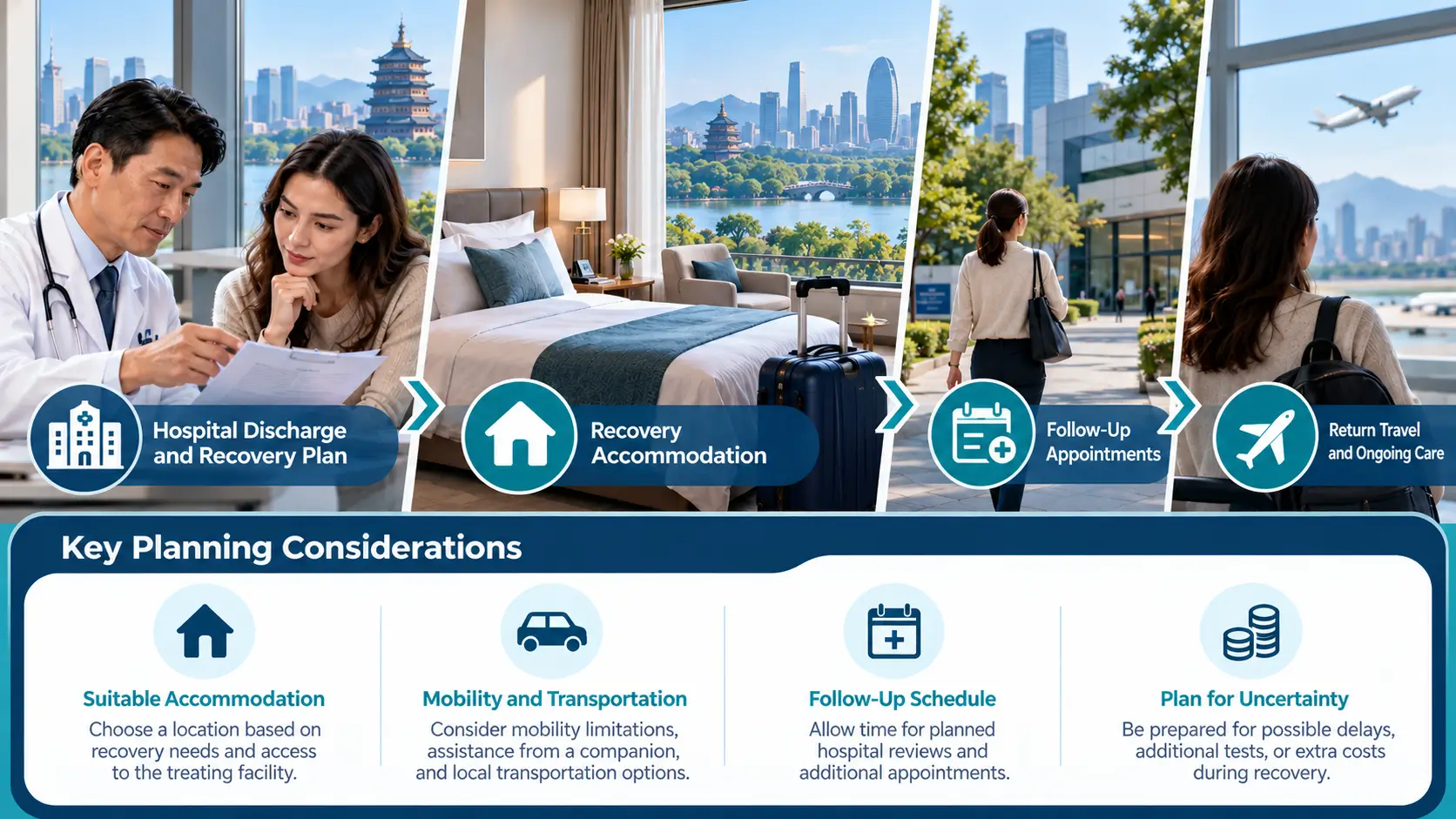
Mobility limitations, assistance from a companion, access to transportation, and the frequency of medical appointments may also influence the choice.
However, ordinary accommodation is not a substitute for medically required monitoring or nursing care.
If a patient needs continued clinical observation, the appropriate setting should be determined by the treating team.
International patients should also plan for uncertainty.
Unexpected test results, delayed wound healing, additional medical reviews, or changes in treatment may require a longer stay in China.
These changes may affect hospital charges, accommodation costs, transportation, and return flights.
Initial hospital estimates may not cover every possible complication or additional service.
Patients should distinguish between the cost of planned treatment and the financial exposure associated with unforeseen medical needs.
Insurance arrangements require separate verification.
Travel insurance, international medical insurance, and medical evacuation insurance may cover different events and expenses.
The CDC Yellow Book guidance on travel and medical evacuation insurance recommends reviewing coverage before international travel and understanding how emergency medical treatment, overseas payments, and evacuation arrangements are handled.
Patients should specifically ask whether their policy covers planned treatment in China, treatment-related complications, additional hospitalization, medically necessary changes to travel plans, and medical evacuation.
They should also verify whether the insurer pays the hospital directly or requires the patient to pay first and seek reimbursement.
A workable recovery plan should allow appropriate flexibility. The length of any additional stay should reflect the procedure, the clinical assessment, and the requirements for necessary follow-up, not a universal number of recovery days.
When Is It Safe to Fly Home After Medical Treatment in China?
There is no single waiting period that makes international air travel safe after every medical procedure.
The decision depends on the treatment performed, the patient’s actual recovery, individual risk factors, and the specific journey.
A Chinese hospital’s discharge decision should not automatically be interpreted as confirmation that a patient is fit for a long-distance flight.
Patients should understand what medical evaluation is required before their return journey and how flight plans may need to change if recovery does not proceed as expected.
Why Return-Flight Timing Depends on the Procedure and Patient
Different procedures create different risks during air travel.
The CDC Yellow Book medical tourism guidance advises against flying during the first 10 days after chest or abdominal surgery because of risks related to changes in atmospheric pressure.
It also describes separate recommendations for certain cosmetic procedures.
These are procedure-specific recommendations. They should not be generalized into a rule that every patient must wait the same number of days after medical treatment in China.
For other procedures, the relevant timing may depend on wound healing, mobility, postoperative investigations, complications, and other individual clinical factors.
For example, a patient recovering from major orthopedic surgery may require assessment of mobility and blood clot risk. A patient who has undergone a procedure involving the chest or abdomen may require additional consideration of the effects of cabin pressure.
The treating team must evaluate these concerns in the context of the actual procedure.
The patient’s medical history also matters.
Recent surgery, previous venous thromboembolism, active cancer, limited mobility, and certain other conditions may influence the risk associated with prolonged travel.
Some patients may need further medical investigation before a return flight can be considered appropriate.
The fact that a scheduled departure date has arrived does not mean the necessary recovery conditions have been met.
Confirm Medical Fitness to Fly and Airline Requirements
Medical fitness to fly and airline acceptance requirements are related but separate matters.
The Chinese treating team should assess whether the patient’s clinical condition is suitable for the planned journey and explain whether any additional medical evaluation or precautions are required.
The airline may also have requirements for passengers with particular conditions, recent surgery, restricted mobility, or a need for medical assistance during travel.
Patients should check the airline’s procedures when relevant.
A hospital discharge summary is not automatically a fitness-to-fly certificate, and an airline’s acceptance of a passenger does not replace clinical advice.
Before finalizing a flight, patients should ask the treating clinician whether recovery has progressed sufficiently, whether further examination is needed, and whether the flight duration or planned travel conditions create additional concerns.
If the patient has increased blood clot risk, the clinician may recommend individualized preventive measures.
The CDC guidance on travel-related blood clots discusses preventive approaches based on risk factors, including movement during travel and, for selected patients, other measures determined by healthcare professionals.
Patients should not independently begin anticoagulant medication, aspirin, or other preventive treatments without appropriate clinical guidance.
What If Recovery or Return Travel Is Delayed?
Recovery may progress differently from the original estimate.
A planned postoperative review may reveal a concern requiring further monitoring. New symptoms may develop, or the treating team may recommend additional investigations.
In these circumstances, travel arrangements should be reassessed rather than forcing the patient to follow the original itinerary.
Return-Travel Decision Conditions
| Patient Situation | Appropriate Next Step |
|---|---|
| Recovery is progressing and the treating team has assessed flight suitability | Confirm airline requirements and the necessary follow-up arrangements |
| Important postoperative assessments remain incomplete | Complete the required medical evaluation before finalizing travel |
| New symptoms or complications develop | Seek prompt clinical assessment and reconsider the return journey |
| A clinician advises against flying | Postpone travel and follow the clinical recommendations |
| Recovery requires an extended stay in China | Review accommodation, medical appointments, insurance, and applicable stay requirements |
Patients should establish whether return flights can be changed and how accommodation or medical appointments could be extended.
They should also know how to contact the Chinese hospital if their recovery changes after discharge.
Any extension of the patient’s stay must remain consistent with applicable entry and stay conditions. Administrative arrangements should be confirmed through the relevant Chinese authorities when necessary.
Medical recovery should determine whether travel can proceed, rather than allowing a prebooked flight to dictate the patient’s clinical decisions.
How to Arrange Follow-Up Care After Treatment at a Chinese Hospital
Follow-up care is one of the most important considerations in cross-border medical planning.
A successful procedure does not automatically establish that the patient can safely manage every part of recovery after returning home.
Some patients may only need written discharge instructions. Others may require specialist reassessment, wound care, repeat imaging, medication monitoring, rehabilitation, or further treatment.
The central task is to confirm what follow-up is medically necessary, who can provide it, and how the Chinese treating team’s information will reach the appropriate healthcare professional.
The plan should be discussed before travel when significant follow-up needs are anticipated and refined after the Chinese treating team confirms the procedure and recovery requirements.
Identify an Appropriate Healthcare Professional at Home
Patients expecting continued medical care after treatment in China should discuss the proposed arrangements with an appropriate healthcare professional in their home country.
Depending on the treatment, this may be a primary care physician, specialist, surgeon, rehabilitation professional, or another qualified clinician.
The required level of follow-up will differ.
A patient receiving a straightforward outpatient service may not need an extensive handoff to a specialist. Someone undergoing major surgery or treatment requiring ongoing monitoring may need a clearly established clinical pathway.
Patients should not assume that every local practice can provide the necessary postoperative care.
For example, some clinicians may be able to perform routine wound assessments but may not have access to the specialist investigations or services required after a complex procedure.
Where substantial follow-up is expected, patients should confirm whether an appropriate local clinician is willing and able to provide the required care.
If necessary follow-up services cannot be arranged, the patient should discuss this limitation with the Chinese treating team before finalizing the medical travel plan.
The absence of an established follow-up provider does not automatically make every form of medical travel inappropriate. Its significance depends on whether continuing clinical care is actually required and whether a safe alternative arrangement is available.
Prepare a Medical Handoff Package Before Leaving China
Medical records are essential when another healthcare professional must understand treatment performed at a Chinese hospital.
A useful handoff package should explain what was done, which clinical findings were obtained, what medicines were prescribed, and what further assessments may be necessary.
China’s Regulation on Medical Records Management in Medical Institutions, in its 2013 edition, establishes procedures for managing medical records and accepting patient applications to obtain copies of specified materials.
Patients should confirm the hospital’s current records-request procedures, identification requirements, available formats, and arrangements for obtaining completed reports.
The hospital may have a designated medical records department or other authorized personnel responsible for these requests.
The following materials may be important for continued care, depending on the medical procedure.
- Discharge summary and final documented diagnosis.
- Operative or procedure report, when applicable.
- Relevant pathology and laboratory results.
- Medical imaging reports and DICOM image files where required.
- Current medication list with generic names, doses, and administration instructions.
- Information about implants or medical devices, where relevant.
- Recovery restrictions, rehabilitation recommendations, and follow-up requirements.
- Written instructions identifying symptoms that require medical assessment.
- Contact information for the Chinese treating department.
Not every document is necessary for every patient.
For example, DICOM imaging may be particularly useful when a specialist needs to review diagnostic images or treatment-related findings. It may be unnecessary for a routine service that did not involve medical imaging.
Patients should ask the clinician providing follow-up which documents and formats would be useful.
Where the receiving clinician cannot read Chinese, accurate translation of clinically relevant records may be necessary.
A summary translated into English can improve communication, but it should faithfully reflect the original clinical record. Translation does not replace medical interpretation by the receiving clinician.
Patients should request essential documents before leaving China whenever feasible and confirm how to obtain any records that are not yet complete.
Sensitive medical information should be transferred and stored through appropriately secure channels.
Clarify Follow-Up Timing and Responsibility
Follow-up planning requires both a clinical schedule and an agreed communication pathway.
Before discharge from the Chinese hospital, the treating team should explain the assessments required during recovery, their intended timing, and any symptoms or test results that would change the plan.
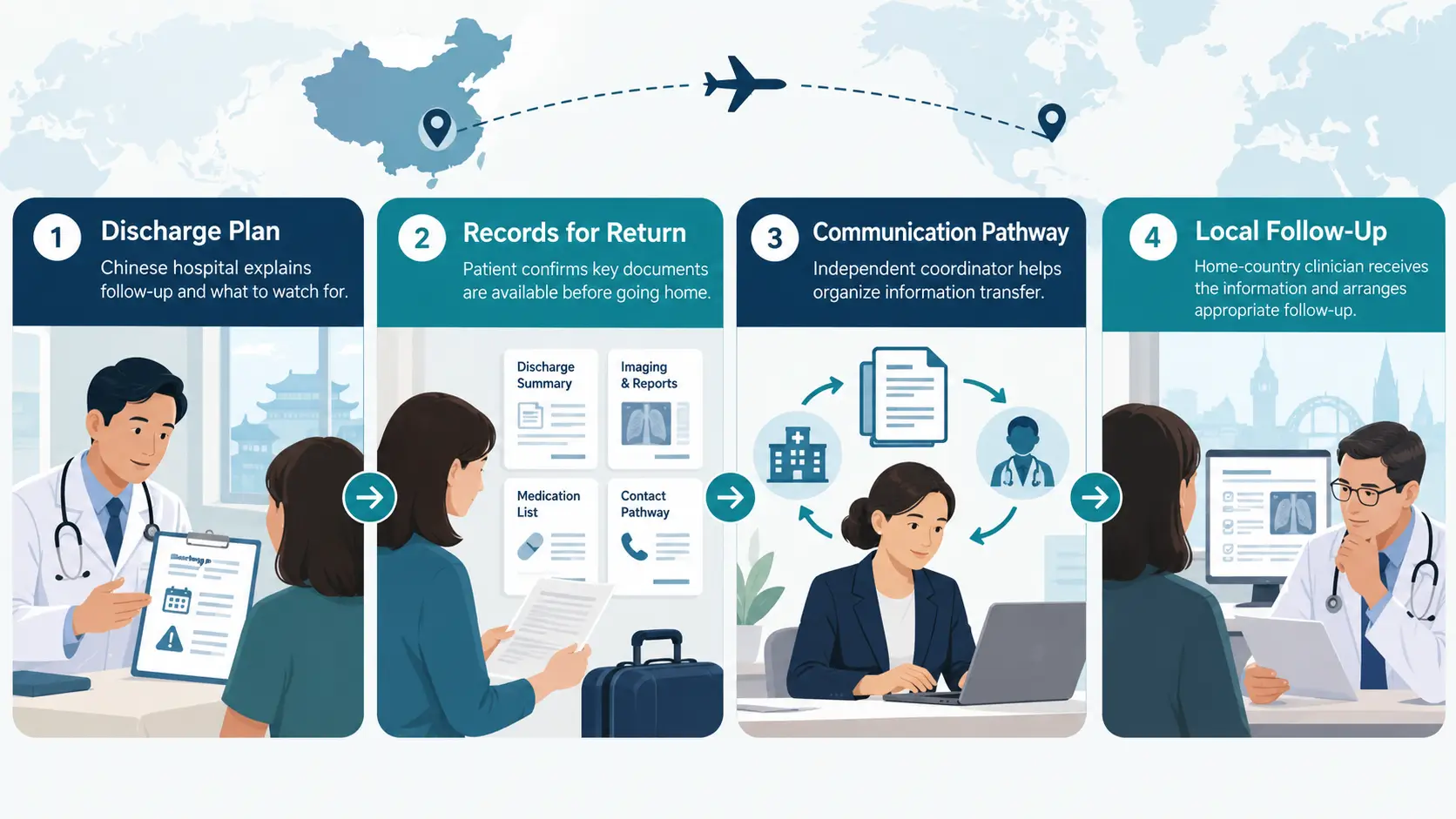
Before returning home, the patient should confirm which records are available and whether necessary care can continue after arrival.
After returning home, the appropriate clinician should receive the relevant information and determine how to implement the recommended follow-up within the available healthcare system.
There is no universal rule that all patients must attend follow-up at 72 hours, one week, or another fixed interval.
The schedule should reflect the treatment, the patient’s condition, and the clinical team’s recommendations.
Medical Follow-Up Responsibility Matrix
| Care Requirement | Responsible Party to Confirm |
|---|---|
| Clinical treatment and discharge instructions | Chinese treating hospital |
| Postoperative reviews required in China | Chinese treating team |
| Medical records and imaging | Chinese hospital and its records department |
| Necessary follow-up after returning home | Appropriate receiving healthcare professional |
| Medication monitoring or adjustment | Qualified clinician responsible for ongoing care |
| Remote questions about treatment in China | Chinese treating team, where an appropriate service is available |
| New or urgent medical symptoms | Appropriate local clinical or emergency services |
This division of responsibilities should be clarified before the patient leaves China.
For example, if a wound review is required after returning home, the patient should know whether the receiving clinician can perform it, when the review is expected, and what should happen if healing is abnormal.
If the Chinese treating team recommends repeat imaging, the patient should establish whether it can be completed locally and how the results can be shared with the relevant clinician.
The goal is not simply to exchange documents but to ensure that each necessary clinical task has an appropriate provider.
Understand the Limits of Remote Follow-Up
Remote communication may help patients clarify previous treatment records, ask nonurgent questions, or share relevant clinical information with the Chinese treating team.
However, its usefulness depends on the service actually offered by the hospital and the patient’s clinical needs.
Some postoperative concerns require physical examination. Others may require imaging, laboratory investigations, or treatment that cannot be provided through remote communication.
Remote services may also be limited by clinician availability, cross-border professional requirements, and the hospital’s actual service arrangements.
Patients should confirm whether the Chinese hospital offers postoperative remote consultation, which team provides it, what information can be reviewed, and how contact is arranged.
They should also understand that the Chinese treating team may not be able to prescribe medication or arrange clinical services directly in another country.
When urgent symptoms arise, patients should seek appropriate local medical care rather than waiting for a reply through an international communication channel.
The most reliable continuity plan combines accurate information from the Chinese hospital with access to necessary clinical services wherever the patient is recovering.
What Should Patients Do if Complications Develop During or After Medical Care in China?
Complications require different responses depending on their severity, the treatment received, and the patient’s current location.
Routine recovery questions may be addressed during scheduled follow-up. New or worsening symptoms may require prompt clinical assessment, while potentially life-threatening symptoms require emergency care.
Patients should not delay necessary medical treatment while waiting for a hospital coordinator, travel service, or overseas clinician to respond.
A clear response plan should be established before discharge from the Chinese hospital.
Recognize Symptoms That Require Medical Attention
The Chinese treating team should explain the warning signs relevant to the procedure and the patient’s medical condition.
Some symptoms can indicate serious complications.
Sudden difficulty breathing, chest pain, uncontrolled bleeding, loss of consciousness, or other signs of acute deterioration require immediate emergency evaluation.
Other concerning symptoms may include fever, increasing wound pain, unusual discharge, worsening swelling, or unexpected limitations in movement.
The importance of these findings depends on the clinical situation.
For example, leg pain and swelling after recent surgery or long-distance travel may raise concern about deep vein thrombosis. Sudden shortness of breath or chest pain may indicate a serious condition such as pulmonary embolism.
The CDC guidance on DVT and pulmonary embolism explains the relevant risk factors and typical symptoms, while emphasizing the need for appropriate medical evaluation.
Patients should not use a general symptom list to determine that a problem is harmless.
The purpose of recognizing warning signs is to seek appropriate medical assessment promptly, not to diagnose or treat complications independently.
Know Whom to Contact in China and After Returning Home
Patients should understand the contact pathway for three situations.
While recovering in China, nonurgent questions about a procedure may be directed to the confirmed hospital contact or treating department.
If new symptoms develop, the patient should seek clinical assessment through an appropriate medical service. The treating hospital may be able to provide reassessment or advise on the appropriate clinical pathway, depending on the circumstances.
For an emergency in mainland China, the ambulance emergency number is 120, as listed in the Chinese government’s public telephone guidance.
Patients and accompanying family members should know the location of the nearest appropriate emergency service and have relevant treatment information accessible.
After returning home, patients should contact the healthcare professional responsible for follow-up when nonemergency clinical concerns arise.
Serious or rapidly worsening symptoms should be addressed through local emergency medical services.
If an emergency develops during international travel, patients should seek assistance through the appropriate medical and emergency services available at their current location.
Healthcare professionals evaluating a patient after medical treatment in China should be informed about the overseas procedure, treatment dates, medications, and available records.
The CDC Yellow Book guidance on obtaining healthcare abroad recommends informing healthcare professionals about relevant overseas medical encounters, particularly because some patients may return with healthcare-associated or antimicrobial-resistant infections.
This information allows clinicians to consider the appropriate medical context. It does not mean that every returning patient requires infection testing.
Document Complications and Understand Support Boundaries
If a complication develops, accurate medical documentation can support subsequent care.
Patients should preserve relevant medical reports, test results, prescriptions, discharge instructions, and records of any additional assessments or treatment.
They should also provide the receiving medical team with a clear account of the treatment performed in China and the course of symptoms.
Documentation becomes particularly important when more than one healthcare institution is involved.
Medical coordination services may assist with communication, arranging document transfers, or clarifying administrative procedures within their agreed responsibilities.
However, they cannot independently diagnose complications, determine whether clinical treatment was appropriate, or decide whether a medical injury constitutes professional negligence.
A complication does not automatically establish that a healthcare professional committed an error.
Concerns about informed consent, treatment quality, medical charges, and legal responsibility may require different forms of professional assessment.
Patients who need to understand the relevant procedures can consult RegenComp’s guide to medical tourism patient rights, complaints and legal recourse in China.
Medical care and legal or administrative disputes should be handled as separate priorities.
When urgent treatment is necessary, the patient should obtain appropriate clinical assistance before attempting to resolve a complaint.
How to Check Whether Your Medical Travel and Recovery Plan Is Ready
A medical travel plan should be considered sufficiently prepared only when the essential clinical and practical requirements have been appropriately addressed.
Confirmed flights, hotel reservations, and a hospital appointment do not establish that treatment, recovery, and follow-up arrangements are complete.
For international patients considering healthcare in China, planning readiness depends on the proposed treatment, the level of medical risk, and whether the required clinical support is available.
The objective is not to eliminate every uncertainty. Some medical decisions cannot be finalized until the Chinese treating team has completed the necessary assessment.
Instead, patients should identify which matters can be confirmed before travel, which require further clinical evaluation, and which unresolved issues could make the proposed journey unsafe or impractical.
Complete a Recovery and Follow-Up Readiness Checklist
Before making final travel commitments, patients should review the following questions.
- Has an appropriately qualified healthcare professional considered whether my current condition and planned medical travel are compatible?
- Have I verified the Chinese hospital, relevant clinical department, and proposed medical professionals?
- Do I understand the main risks associated with my planned treatment and how the hospital would manage complications?
- Have I confirmed suitable language assistance for important clinical communication and informed consent?
- Have I checked the Chinese entry requirements for the medications I intend to bring?
- Do I understand which recovery requirements and medical reviews may be necessary in China?
- Have I discussed return-flight safety with the appropriate clinical team?
- Do I know whether the airline has additional medical clearance requirements?
- If follow-up care is required after returning home, have I identified an appropriate healthcare professional or alternative care arrangement?
- Do I know which medical records and treatment instructions must be obtained before leaving China?
- Have I checked the relevant insurance conditions, possible additional medical costs, and options for unexpected recovery delays?
- Do I know how to contact the treating hospital for nonurgent concerns and where to obtain urgent medical assistance?
Not all questions carry the same weight for every patient.
For example, someone traveling to China for a routine consultation may have limited recovery requirements. A patient undergoing complex surgery may need more extensive arrangements covering clinical monitoring, rehabilitation, and specialist follow-up.
The checklist should therefore be interpreted according to the actual medical service and professional advice.
Decide What Must Be Confirmed Before Committing to Travel
Patients can use three planning categories to identify the appropriate next action.
Recovery and Follow-Up Planning Status
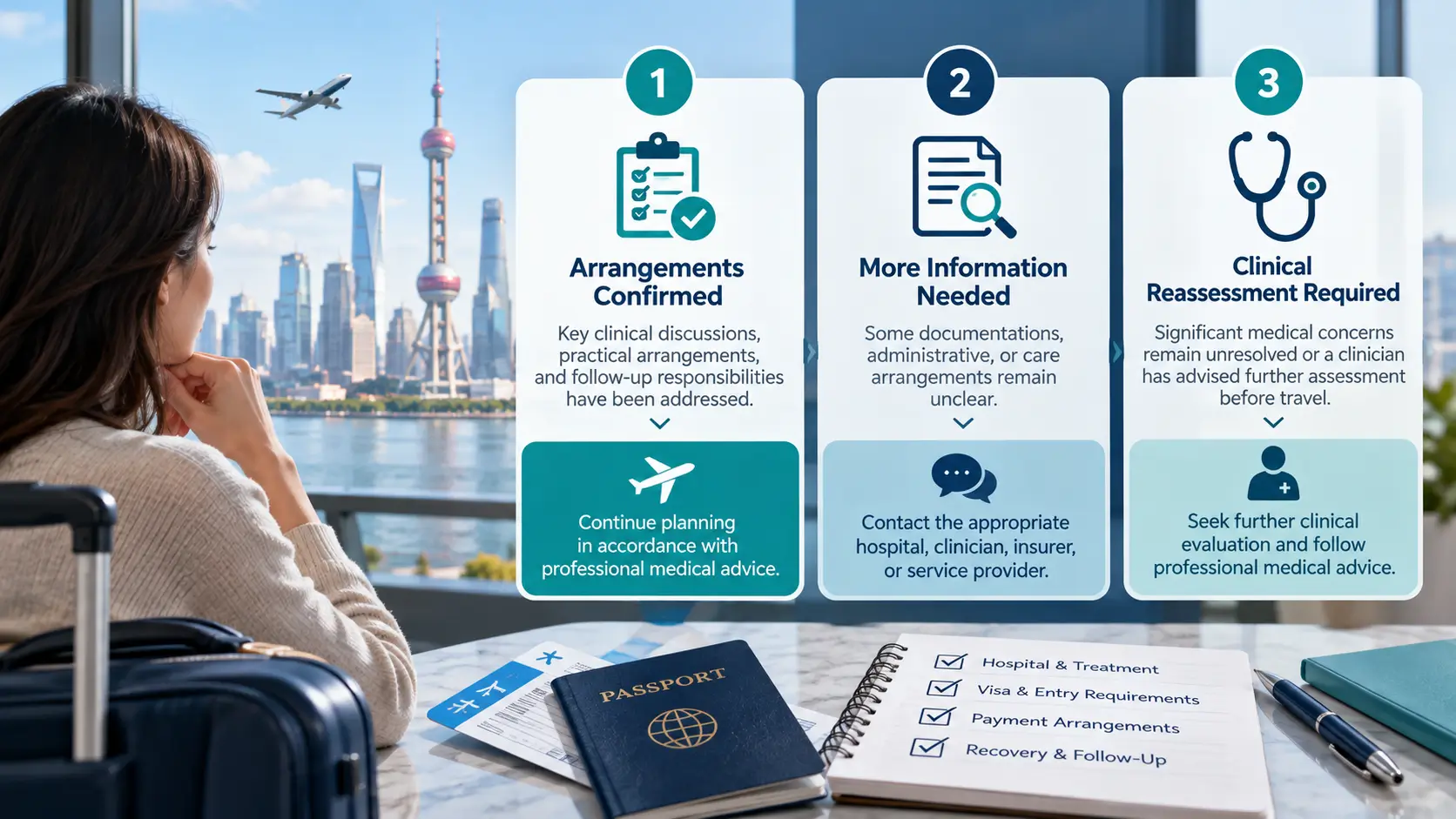
| Planning Status | What It Means | Appropriate Next Action |
|---|---|---|
| Arrangements Confirmed | Essential clinical discussions, practical arrangements, and relevant follow-up responsibilities have been addressed | Continue planning in accordance with professional medical advice |
| More Information Needed | Some documentation, administrative, or care arrangements remain unclear | Contact the appropriate hospital, clinician, insurer, or responsible service provider |
| Clinical Reassessment Required | Significant medical concerns remain unresolved or a clinician has advised further evaluation | Reassess the proposed treatment or travel plan before making further commitments |
These categories evaluate the completeness of preparation.
They do not establish treatment eligibility, certify that the patient is medically fit to travel, or guarantee a favorable outcome.
For example, a patient may have received an initial appointment confirmation from a Chinese hospital but still require specialist assessment before treatment can be recommended.
Another patient may have completed a planned procedure but require further observation before a return flight becomes appropriate.
In both situations, the relevant medical decision remains with qualified healthcare professionals.
When an important clinical requirement cannot be met, the appropriate next step may be to obtain additional evaluation, change the care arrangements, postpone travel, or consider other suitable treatment options.
The central principle is that travel plans should follow clinically appropriate decisions rather than determine them.
When May Medical Coordination Support Be Useful?
Medical coordination may be useful when patients need assistance connecting the administrative and communication requirements of different stages of care.
Some international patients can contact Chinese hospitals, submit records, organize appointments, and manage travel arrangements independently.
Others may need practical support because they are unfamiliar with Chinese hospital procedures, language arrangements, medical documentation requirements, or the steps involved in communicating across healthcare systems.
RegenComp supports international patients exploring medical services in China through assistance with medical record preparation, hospital and specialist communication, appointment coordination, and relevant practical arrangements.
Depending on the patient’s needs and the agreed service scope, coordination may also help clarify which documents are requested by the Chinese hospital and how necessary follow-up information can be communicated.
These activities are distinct from medical practice.
RegenComp does not independently provide diagnosis, prescribe medication, determine treatment eligibility, authorize air travel after surgery, or assume responsibility for clinical follow-up.
Those responsibilities remain with the relevant qualified healthcare professionals and institutions.
Before requesting coordination assistance, patients may find it useful to prepare their principal medical concern, existing diagnosis where available, important test results, treatment history, intended consultation goals, and any known recovery or follow-up requirements.
Patients who need a broader overview of medical travel arrangements can review RegenComp’s preparation checklist for medical treatment in China.
A medical travel plan is not complete simply because treatment has been arranged. It should also account for possible complications, recovery requirements, safe return travel, and continuity of care.
For patients considering treatment in China, confirming these arrangements before making final travel commitments can help identify avoidable gaps, clarify clinical and practical responsibilities, and support more informed decisions.
If you need assistance communicating with a Chinese hospital, organizing relevant medical information, or clarifying the practical arrangements for a planned medical visit, RegenComp can help you understand the available nonclinical coordination support.
The medical decisions remain with qualified healthcare professionals, while the patient’s priority remains receiving appropriate care throughout treatment, recovery, and the transition back home.